Blast Proof Doors VS Bullet Resistant Doors
Published at: Sep 04, 2026
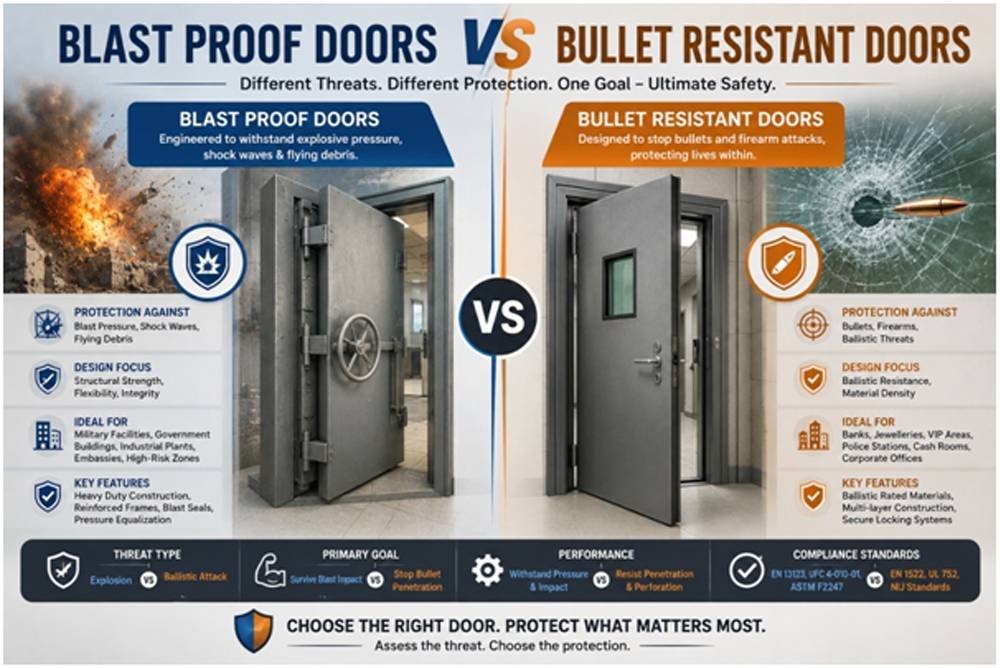
Blast Proof Doors vs Bullet Resistant Doors: Which One Do You Need?
When protecting people, assets, and critical infrastructure, choosing the right security door is one of the most important decisions. Many people assume that blast proof doors and bullet resistant doors serve the same purpose, but they are designed to withstand entirely different threats.
Understanding the difference between these specialized doors helps architects, engineers, facility managers, and security consultants select the most effective solution for their projects. Whether you're securing a government building, military installation, embassy, oil and gas facility, or commercial property, knowing which door fits your security requirements can save lives and reduce property damage.
In this guide, we'll compare blast proof doors and bullet resistant doors, explain their applications, and help you determine which option is best for your facility.
What Are Blast Proof Doors?
Blast proof doors are specially engineered security doors designed to withstand the intense pressure generated by explosions. Unlike standard security doors, they are manufactured using reinforced steel, heavy-duty locking mechanisms, and specialized structural components that absorb and distribute blast energy.
Their primary purpose is to reduce structural damage while protecting occupants from:
- Explosion pressure waves
- Flying debris
- Fragment impacts
- Fire following an explosion
- Structural collapse risks
Blast proof doors undergo rigorous testing to meet international blast resistance standards, ensuring reliable performance in high-risk environments.
What Are Bullet Resistant Doors?
Bullet resistant doors are designed to stop or significantly slow down projectiles fired from firearms. Instead of resisting explosive pressure, these doors focus on preventing bullet penetration and protecting people during armed attacks.
They are commonly manufactured using:
- Ballistic steel
- Composite materials
- Reinforced cores
- Bullet resistant glass (when vision panels are included)
These doors are tested according to ballistic standards to ensure they can withstand specific firearm calibers and multiple rounds depending on the required protection level.
The Main Difference Between Blast Proof Doors and Bullet Resistant Doors
Although both provide enhanced security, their protective capabilities differ significantly.
| Feature | Blast Proof Doors | Bullet Resistant Doors |
|---|---|---|
| Primary Protection | Explosions | Gunfire |
| Resists Pressure Waves | Yes | No |
| Stops Bullets | Limited (unless combined) | Yes |
| Structural Reinforcement | Heavy-duty | Moderate to Heavy |
| Common Applications | Oil & Gas, Military, Chemical Plants | Banks, Schools, Offices, Government Buildings |
The biggest difference is the threat they are designed to withstand.
A blast proof door is engineered to survive an explosion, while a bullet resistant door is designed to stop bullets.
Where Are Blast Proof Doors Used?
Blast proof doors are installed in facilities where explosion risks are present.
Typical applications include:
- Oil and gas facilities
- Petrochemical plants
- Military bases
- Defense facilities
- Ammunition storage
- Power generation plants
- Chemical processing plants
- Data centers
- High-security government buildings
These environments require doors capable of maintaining structural integrity during a blast event.
Where Are Bullet Resistant Doors Used?
Bullet resistant doors are ideal for locations facing potential armed attacks.
Common installations include:
- Banks
- Financial institutions
- Schools
- Universities
- Government offices
- Police stations
- Courthouses
- Embassies
- Cash handling facilities
- Corporate headquarters
Their goal is to protect occupants during active shooter incidents or targeted attacks.
Can a Door Be Both Blast Proof and Bullet Resistant?
Yes.
Many high-security facilities require protection against multiple threats. Manufacturers can engineer doors that combine both blast resistance and ballistic protection.
These specialized security doors typically feature:
- Reinforced steel construction
- Ballistic armor plates
- Heavy-duty hinges
- Multi-point locking systems
- Blast-resistant frames
- Fire-resistant insulation
- Bullet resistant vision panels
These combination doors are commonly installed in:
- Embassies
- Military command centers
- Critical infrastructure
- Border security facilities
- Defense research centers
Although these doors cost more, they provide comprehensive protection against both explosions and ballistic attacks.
Factors to Consider Before Choosing
Before selecting a security door, evaluate your facility's specific risks.
1. Type of Threat
Ask yourself:
- Is there a risk of explosions?
- Is firearm protection the priority?
- Is protection needed from both threats?
A proper risk assessment should always come first.
2. Industry Requirements
Different industries have different security requirements.
For example:
- Oil & Gas facilities typically require blast proof doors.
- Banks often prioritize bullet resistant doors.
- Military installations may require both.
3. Compliance Standards
Ensure the door complies with recognized international testing standards for blast or ballistic resistance.
Certified products provide verified performance under real-world conditions.
4. Installation Quality
Even the highest-quality security door can fail if installed incorrectly.
Professional installation ensures:
- Proper frame anchoring
- Correct alignment
- Reliable locking performance
- Structural stability during emergencies
5. Future Security Needs
Security threats evolve over time.
Investing in modular or upgradeable security solutions can improve long-term protection without replacing the entire door system.
Which Door Do You Need?
The answer depends entirely on your security requirements.
Choose blast proof doors if your facility faces risks from:
- Industrial explosions
- Terrorist attacks involving explosives
- Hazardous chemical operations
- Pressure wave exposure
Choose bullet resistant doors if your primary concern is:
- Armed intrusion
- Active shooter incidents
- Robbery attempts
- High-value asset protection
If your facility faces both threats, consider a custom-engineered solution that combines blast resistance with ballistic protection.
Final Thoughts
Choosing between blast proof doors and bullet resistant doors is not simply a matter of selecting the strongest option—it is about choosing the right protection for the risks your facility faces.
Blast proof doors are engineered to withstand explosive forces and protect structures from devastating pressure waves, while bullet resistant doors are specifically designed to stop firearm projectiles and safeguard occupants during armed attacks. In high-security environments such as military facilities, embassies, critical infrastructure, and industrial plants, a combination of both technologies may provide the highest level of protection.
Before making a decision, conduct a thorough risk assessment, consult experienced security professionals, and invest in certified door systems that meet internationally recognized standards. The right security door is a long-term investment that enhances safety, protects valuable assets, and provides peace of mind in the most demanding environments.