Guide to Blast Proof Doors
Published at: Jul 20, 2026
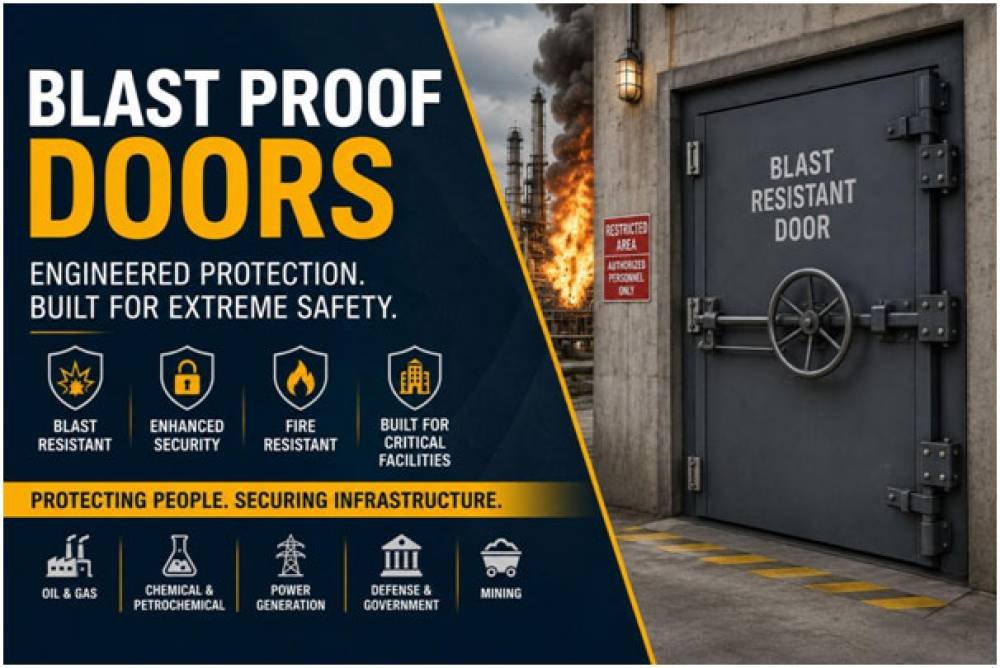
Blast Proof Doors: Essential Protection for High-Risk Industrial and Government Facilities
Protecting people, equipment, and critical infrastructure has become a priority across industries where explosion risks are present. Facilities operating in oil and gas, petrochemical processing, defense, power generation, pharmaceuticals, mining, and chemical manufacturing require security systems capable of withstanding extreme events. One of the most important components in these environments is the blast proof door.
Blast proof doors are specially engineered to resist explosive forces while maintaining the structural integrity of a building. Unlike conventional steel doors, they are designed to withstand high-pressure shock waves, flying debris, and intense impact loads without catastrophic failure. Their purpose is not only to protect property but also to provide occupants with valuable time during emergencies.
This guide explains how blast proof doors work, where they are used, their key features, industry standards, and how to select the right solution for your facility.
What Are Blast Proof Doors?
Blast proof doors are heavy-duty security doors engineered to resist the pressure generated by explosions. They are manufactured using reinforced steel, heavy-duty locking systems, specialized hinges, and robust frames capable of absorbing blast energy.
Although the terms blast proof doors and blast resistant doors are often used interchangeably, the industry generally refers to these products as blast resistant because no door can guarantee complete protection against every possible explosion. Instead, they are designed and tested to withstand specified blast loads and pressure levels.
Their primary objective is to minimize structural damage, reduce injuries, and maintain secure access during and after an explosion.
How Blast Proof Doors Work
Blast proof doors function by distributing explosive pressure across the door assembly rather than allowing concentrated force to damage a single point.
The engineering process involves several protective elements:
- Reinforced steel construction
- Heavy-duty internal stiffeners
- Blast-rated locking mechanisms
- High-strength hinges
- Reinforced frames
- Secure anchoring systems
- Precision sealing systems
During an explosion, these components work together to absorb and redirect blast energy while preventing the door from detaching from its frame.
Why Blast Proof Doors Are Important
Industrial explosions can occur due to gas leaks, combustible dust, chemical reactions, equipment failures, or accidental ignition sources. Without proper protection, blast pressure can cause severe structural damage within seconds.
Installing blast proof doors offers several benefits:
- Protects employees during emergencies
- Reduces structural damage
- Limits blast wave transmission
- Protects valuable equipment
- Supports emergency evacuation
- Maintains operational continuity
- Enhances facility security
These advantages make blast resistant doors an essential part of comprehensive industrial safety planning.
Industries That Require Blast Proof Doors
Oil and Gas Facilities
Refineries, offshore platforms, LNG terminals, and fuel storage facilities operate with highly combustible materials. Blast resistant doors help secure control rooms, process buildings, and emergency shelters.
Petrochemical Plants
Chemical processing facilities use hazardous substances capable of producing high-pressure explosions. Blast proof doors help protect personnel and sensitive equipment.
Military and Defense Facilities
Military installations require blast protection for command centers, ammunition storage, security checkpoints, and operational buildings.
Power Generation Plants
Power stations, substations, and energy facilities use blast resistant doors to secure control rooms and electrical infrastructure.
Pharmaceutical Manufacturing
Some pharmaceutical processes involve volatile chemicals requiring blast mitigation solutions to improve workplace safety.
Mining Operations
Mining sites may encounter explosive gases and dust. Blast resistant access systems provide additional protection in hazardous environments.
Key Features of Blast Proof Doors
Reinforced Steel Construction
Most blast proof doors are manufactured from high-strength steel capable of resisting severe impact and pressure.
Blast-Rated Hardware
Specialized hinges, locking systems, handles, and frames are designed to remain functional after blast exposure.
Pressure Resistance
Doors are engineered for specific blast pressures measured in pounds per square inch (PSI) or kilopascals (kPa).
Fire Resistance
Many blast resistant doors also provide certified fire protection, offering dual safety benefits.
Corrosion Protection
Industrial environments expose doors to moisture, chemicals, and salt. Protective coatings extend service life.
Custom Sizes
Blast proof doors can be manufactured for:
- Personnel entrances
- Equipment access
- Emergency exits
- Vehicle access
- Control room entry
Blast Proof Doors vs Standard Steel Doors
|
Feature |
Standard Steel Door |
Blast Proof Door |
|
Explosion Resistance |
No |
Yes |
|
Reinforced Frame |
Basic |
Heavy-duty |
|
Blast Tested |
No |
Yes |
|
Pressure Resistance |
Limited |
Engineered |
|
Industrial Applications |
General |
High-risk facilities |
|
Heavy-Duty Hardware |
Standard |
Blast-rated |
While standard steel doors provide everyday security, they are not engineered to withstand explosive forces.
Important Testing Standards
Reliable blast proof doors should comply with recognized international testing methods and engineering standards.
Manufacturers may design products according to:
- ASTM blast testing procedures
- UFC (Unified Facilities Criteria)
- ISO engineering standards
- Project-specific blast analysis
- Government and military specifications
Testing verifies the door's ability to resist specified blast pressures while maintaining structural performance.
Factors to Consider Before Choosing Blast Proof Doors
Assess the Threat Level
Determine the potential blast pressure based on facility risk assessments.
Understand Building Design
Door performance depends on both the door and the surrounding wall system.
Select the Right Material
High-strength steel remains the preferred material for most industrial applications.
Consider Operational Requirements
Doors should allow smooth daily operation while providing emergency protection.
Verify Certifications
Always request engineering documentation and testing reports.
Work with Experienced Manufacturers
Choose suppliers with proven experience in blast-resistant security systems.
Installation Best Practices
Proper installation is just as important as the door itself.
Professional installation should include:
- Structural frame inspection
- Secure anchoring
- Accurate alignment
- Hardware testing
- Seal verification
- Final operational testing
Incorrect installation can reduce the effectiveness of even the highest-quality blast resistant door.
Maintenance Recommendations
Routine inspections help maintain long-term performance.
Maintenance includes:
- Checking hinges
- Inspecting locks
- Examining seals
- Cleaning moving parts
- Inspecting corrosion protection
- Verifying frame integrity
Scheduled maintenance ensures reliable operation throughout the door's service life.
Why Choose Guardian Walls for Blast Proof Doors?
Guardian Walls specializes in advanced protective solutions designed for demanding environments. The company offers engineered blast resistant products suitable for industrial facilities, defense projects, government buildings, petrochemical plants, and critical infrastructure.
Guardian Walls focuses on:
- High-quality engineering
- Durable steel construction
- Project-specific customization
- Reliable security solutions
- Compliance with industry standards
- Professional technical support
Organizations seeking dependable blast protection solutions can explore Guardian Walls' range of security products to find systems suited to their operational requirements.
Conclusion
Blast proof doors play a vital role in protecting facilities where explosion risks cannot be ignored. Their reinforced construction, engineered pressure resistance, and specialized hardware help reduce structural damage while improving occupant safety.
Selecting the right blast resistant door involves understanding the expected threat level, reviewing applicable testing standards, and ensuring proper installation. Investing in certified blast protection solutions contributes to safer operations, improved regulatory compliance, and long-term asset protection.
For industries where safety is critical, blast proof doors remain an essential component of a comprehensive security strategy.
Frequently Asked Questions (FAQs)
1. What are blast proof doors?
Blast proof doors are reinforced security doors engineered to withstand explosion pressure and reduce damage caused by blast waves and flying debris.
2. Where are blast proof doors commonly installed?
They are used in oil and gas facilities, petrochemical plants, military bases, power stations, pharmaceutical facilities, mining operations, and other high-risk industrial environments.
3. What materials are used to manufacture blast proof doors?
Most blast proof doors are made from reinforced steel with heavy-duty frames, blast-rated hinges, locking systems, and corrosion-resistant finishes.
4. Are blast proof doors fire resistant?
Many blast proof doors are available with integrated fire-resistant features, providing protection against both explosions and fire hazards.
5. How do I choose the right blast proof door?
Consider the required blast pressure rating, industry standards, building design, installation requirements, and manufacturer certifications before selecting a blast resistant door.