Maintain Blast Resistant Doors
Published at: Sep 04, 2026
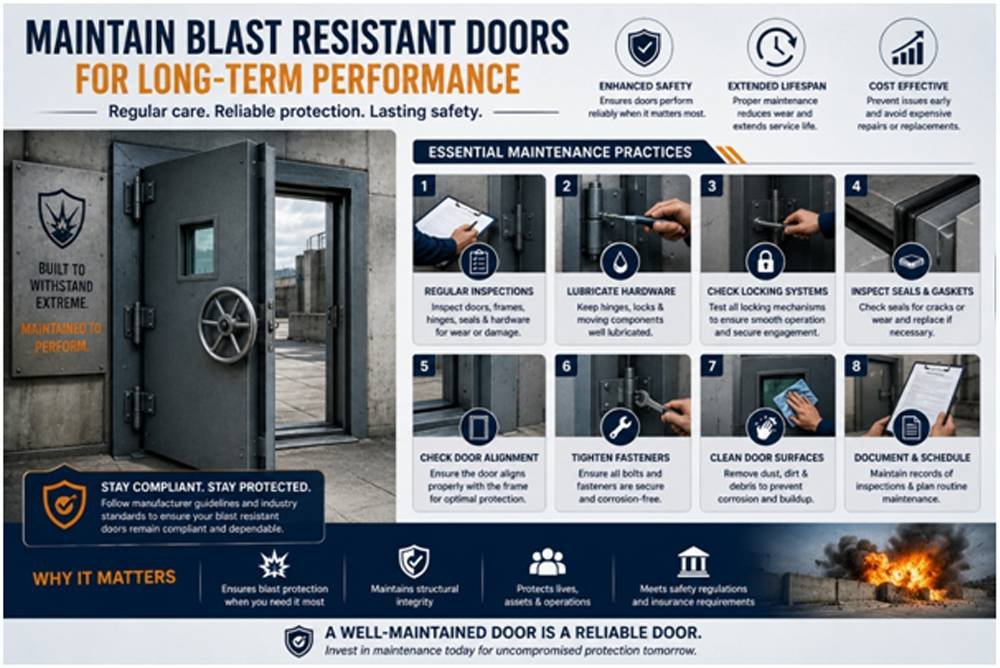
How to Maintain Blast Resistant Doors for Long-Term Performance
Blast resistant doors are a critical part of modern security infrastructure, protecting people, buildings, and valuable assets from explosive threats. These high-performance doors are engineered to withstand extreme pressure, flying debris, and structural impacts during a blast event. However, like any specialized security system, they require regular maintenance to ensure they continue performing as designed.
Neglecting maintenance can lead to reduced functionality, compromised safety, and costly repairs. Whether installed in military facilities, petrochemical plants, government buildings, data centers, or critical infrastructure, proper care extends the lifespan of blast resistant doors while maintaining compliance with safety standards.
This guide explains the essential maintenance practices that help keep blast resistant doors operating reliably for years.
Why Maintenance Matters
Unlike standard commercial doors, blast resistant doors are designed to perform under extraordinary conditions. Their reinforced construction, heavy-duty hinges, locking mechanisms, seals, and frames work together to resist explosive forces.
Routine maintenance helps:
- Preserve structural integrity
- Prevent premature wear and corrosion
- Ensure smooth door operation
- Maintain security performance
- Reduce long-term repair costs
- Extend service life
- Support compliance with safety inspections
A well-maintained blast resistant door is more likely to perform effectively when it is needed most.
1. Perform Regular Visual Inspections
The first step in maintaining blast resistant doors is conducting regular visual inspections. These checks help identify small issues before they become major problems.
Inspect for:
- Surface corrosion
- Rust formation
- Cracks or dents
- Loose hardware
- Damaged hinges
- Misaligned door frames
- Worn weather seals
Even minor structural damage should be evaluated promptly, as it may affect the door's ability to withstand blast pressure.
Monthly inspections are recommended for high-security facilities.
2. Keep Moving Components Properly Lubricated
Blast resistant doors often weigh significantly more than conventional doors. Their heavy-duty hinges and locking systems experience constant mechanical stress.
Lubricate:
- Hinges
- Lock cylinders
- Multi-point locking systems
- Pivot mechanisms
- Roller assemblies (if applicable)
Always use manufacturer-approved lubricants, as unsuitable products may attract dust or damage protective coatings.
Proper lubrication ensures smooth operation while reducing friction and wear.
3. Check Door Alignment
A misaligned blast resistant door may not seal properly during an emergency.
Signs of poor alignment include:
- Difficulty opening or closing
- Uneven gaps around the frame
- Door dragging on the floor
- Excessive force required to latch
If alignment issues are detected, adjustments should be performed by trained technicians to maintain the door's certified performance.
4. Inspect Locks and Latching Systems
The locking mechanism plays a vital role in maintaining the structural integrity of blast resistant doors during an explosion.
Regularly verify that:
- Locks engage completely
- Multi-point latches function correctly
- Keys or electronic access systems operate smoothly
- Emergency release mechanisms work properly
Damaged or worn locking components should be replaced immediately using approved replacement parts.
5. Clean the Door Surface
Dust, chemicals, moisture, and industrial contaminants can gradually damage protective coatings.
Clean the door using:
- Mild detergent
- Soft cloths
- Non-abrasive cleaning solutions
Avoid:
- Strong acids
- Harsh chemicals
- Abrasive pads
- Pressure washing directly on seals
Routine cleaning preserves corrosion-resistant finishes and improves the door's appearance.
6. Examine Seals and Gaskets
Blast resistant doors rely on specialized seals to minimize the effects of pressure, smoke, dust, and environmental exposure.
Inspect seals for:
- Cracks
- Hardening
- Tears
- Compression damage
- Missing sections
Replace damaged seals promptly to maintain the door's protective performance.
7. Protect Against Corrosion
Many blast resistant doors are installed in harsh environments such as:
- Coastal facilities
- Chemical plants
- Offshore platforms
- Industrial sites
These conditions accelerate corrosion.
Prevent rust by:
- Cleaning regularly
- Repairing damaged paint coatings
- Applying corrosion-resistant treatments
- Addressing moisture buildup quickly
Routine corrosion prevention significantly extends the lifespan of steel security doors.
8. Schedule Professional Inspections
While routine visual checks are valuable, certified technicians should inspect blast resistant doors at scheduled intervals.
Professional inspections typically include:
- Structural assessment
- Hardware testing
- Frame inspection
- Weld examination
- Lock calibration
- Operational testing
- Compliance verification
Annual inspections are recommended for most facilities, while high-risk environments may require more frequent evaluations.
9. Test Emergency Operation
In emergencies, blast resistant doors must operate exactly as intended.
Periodically test:
- Opening mechanisms
- Closing speed
- Lock engagement
- Emergency exits
- Access control systems
- Automatic door closers
Any irregular operation should be corrected immediately.
10. Keep Maintenance Records
Maintaining detailed service records helps facility managers monitor the condition of each door over time.
Include information such as:
- Inspection dates
- Repairs performed
- Parts replaced
- Technician reports
- Maintenance schedules
- Operational testing results
Accurate documentation also supports regulatory compliance and warranty claims.
Common Mistakes to Avoid
Improper maintenance can reduce the effectiveness of blast resistant doors. Avoid these common mistakes:
- Ignoring minor damage or corrosion
- Using non-approved replacement parts
- Delaying repairs
- Applying incorrect lubricants
- Failing to inspect locking systems
- Skipping professional servicing
- Modifying the door without manufacturer approval
Preventive maintenance is always more cost-effective than major repairs or complete door replacement.
When Should You Replace a Blast Resistant Door?
Even with excellent maintenance, every blast resistant door has a service life. Replacement may be necessary if the door has:
- Experienced a significant blast event
- Sustained severe structural damage
- Excessive corrosion that weakens the structure
- Repeated operational failures
- Outdated security certifications
- Irreparable frame damage
Consult the manufacturer or a qualified security specialist to determine whether repair or replacement is the most appropriate solution.
Final Thoughts
Investing in blast resistant doors is a long-term commitment to safety, security, and operational resilience. However, even the most advanced door system requires routine maintenance to deliver reliable performance throughout its service life.
Regular inspections, proper lubrication, corrosion prevention, hardware testing, and professional servicing all contribute to maintaining the door's protective capabilities. By following a structured maintenance plan, facility managers can extend the lifespan of their blast resistant doors, reduce repair costs, and ensure these critical security systems are ready to perform when needed.
Proper maintenance not only protects your investment but also helps safeguard people, infrastructure, and business continuity in high-risk environments.